⚠️ Affiliate Disclosure: This post contains Amazon affiliate links. If you purchase through our links, we may earn a small commission at no extra cost to you. Every product below was checked against its live Amazon listing before publishing. Prices change often, so we don’t list them here. Tap any Buy Here button to see the current price on Amazon.
Ultimate Buying Guide
🌱 Best ESP32 Plant Watering and Smart Irrigation Parts
From a single houseplant to a whole garden: the sensors, pumps, valves and drivers you need to build an ESP32 watering system that waters on soil moisture, schedule or weather, and reports everything to your phone or Home Assistant. 12 verified picks with wiring advice.
✅ 12 Parts Compared
✅ Indoor and Garden Builds
✅ Safe Pump and Valve Wiring
✅ Verified Amazon ASINs
🧭
Comparing ESP32 chips? Our
ESP32 chip comparison hub compares every ESP32 chip side by side and links to all of our ESP32 buying guides.
An automatic watering system is one of the most satisfying ESP32 projects: it solves a real problem, it’s cheap to build, and the ESP32’s Wi-Fi lets you check soil moisture, water history and tank level from anywhere. The basic loop is simple. A soil moisture sensor reads how dry the soil is, the ESP32 decides whether to water, and a driver switches a pump or valve on for a set time. Add a flow sensor to measure how much water was delivered and a float switch so the pump never runs dry.
This guide covers 12 parts in four groups: starter kits and soil sensors, pumps for indoor plants and hydroponics, valves and drivers for garden taps and drip lines, and the safety and plumbing extras. Pair them with any ESP32 board; see our ESP32 board guide if you need one.
💡 Before you buy: Use
capacitive soil sensors, not the cheap two-prong resistive probes, which corrode within weeks. Read analog sensors on the ESP32’s
ADC1 pins, because ADC2 can’t be used while Wi-Fi is active.
Never power a pump or valve from a GPIO: switch it with a MOSFET module or relay, add a flyback diode across inductive loads, and give it its own supply. Keep water and electronics apart, and use a
waterproof enclosure outdoors.
⚡ Quick Comparison: All 12 Parts
| Product | Type | Key Spec | Best For | Buy |
|---|
| 🥇 4-Plant Irrigation DIY Kit | Starter kit | 4 sensors, 4 pumps, 4-ch relay, tubing | Best Overall | Buy Here → |
| 🏅 Songhe Capacitive Soil Sensor | Soil sensor | Capacitive, analog, corrosion resistant | Best Soil Sensor | Buy Here → |
| 🟩 Capacitive Soil Sensor Pack | Soil sensor | Capacitive, multi-pack | Many Pots | Buy Here → |
| 🪴 1-Channel Watering Kit | Starter kit | Sensor, 5V relay, pump, tubing | Single Plant | Buy Here → |
| 💧 HiLetgo 12V Brushless Pump (2-Pack) | Pump | 240 L/h, 3 m head, quiet | Tanks & Drip Lines | Buy Here → |
| 🧪 12V Peristaltic Dosing Pump | Pump | Precise, self-priming | Hydroponics & Nutrients | Buy Here → |
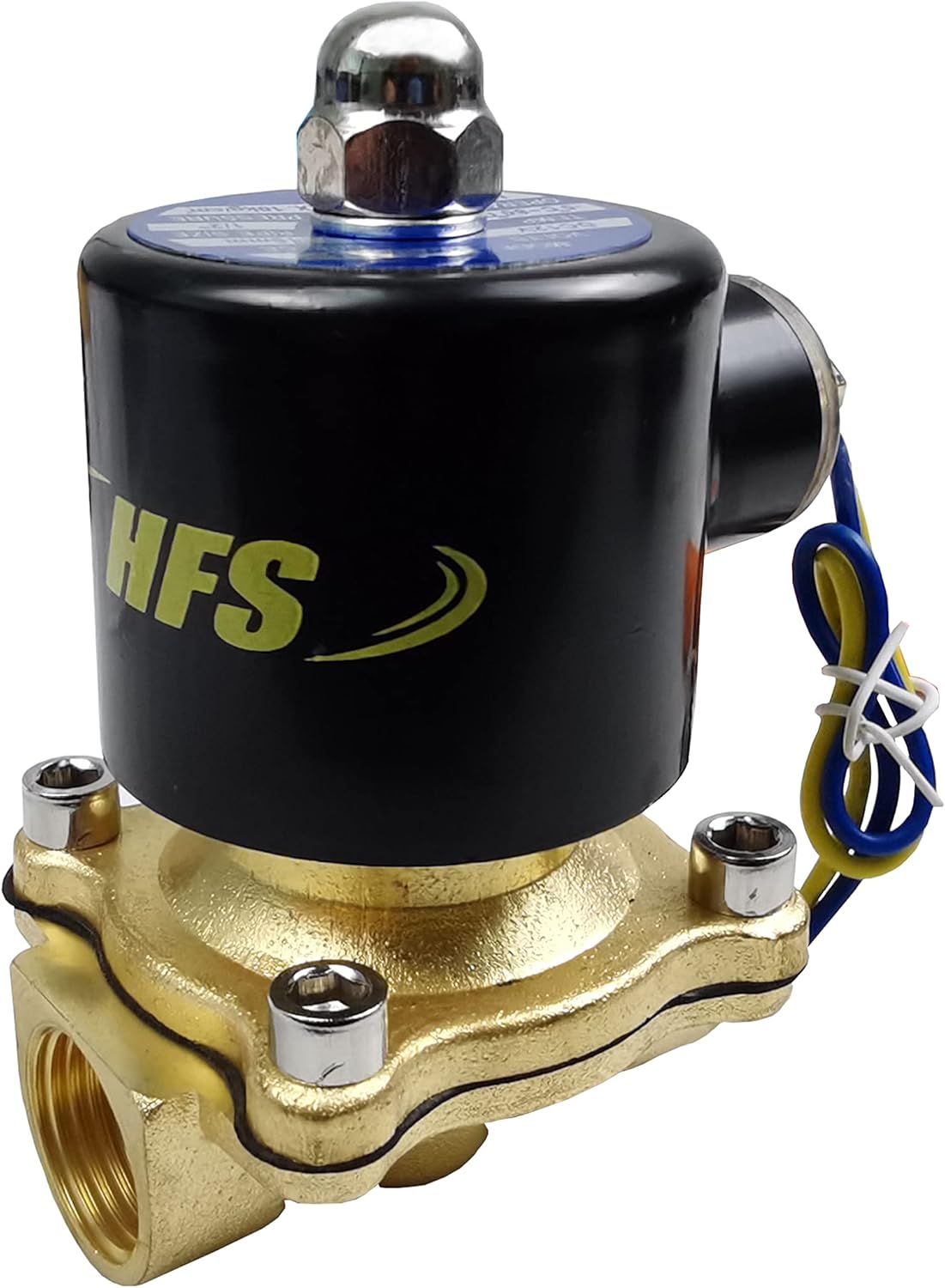
| 🚰 HFS 12V 1/2″ Solenoid Valve | Valve | Normally closed, 1/2″ NPT | Garden Tap Control | Buy Here → |
| ⚡ Dual MOSFET Driver (5-Pack) | Driver | 5–36 V, 15 A | Switching Pumps & Valves | Buy Here → |
| 📈 1/2″ Hall Flow Sensor | Sensor | 1–30 L/min, food grade | Measuring Water Used | Buy Here → |
| 🛡️ Liyafy Float Switch (5-Pack) | Sensor | Right-angle PP float | Tank Level & Dry-Run Protection | Buy Here → |
| 🧵 Clear Tubing Assortment | Plumbing | 2–5 mm ID, 12 m total | Indoor Watering Lines | Buy Here → |
| 🔌 SANSUN 12V 2A Power Supply | Power | ETL listed, 24 W | Powering 12V Pumps & Valves | Buy Here → |
Specs come from the live Amazon listings.
🏆 Detailed Reviews: Kits and Soil Sensors
🥇 BEST OVERALL
Automatic Irrigation DIY Kit for 4 Plants
⭐ 4.0/5 · Everything for 4 Pots
Buy on Amazon →

This kit (about 4.0 stars from 169 ratings) bundles everything for a four-pot watering system: four soil moisture sensors, four small pumps, a 4-channel 5V relay module, tubing and jumper wires. The listing includes its own development board, but the real upgrade is to swap that for an ESP32: you get Wi-Fi monitoring, MQTT logging and Home Assistant integration on the same wiring. Check that the relay module triggers reliably from the ESP32’s 3.3 V signals, and power the pumps from their own supply rather than the board’s 5 V pin. 19 were in stock when we checked.
✅ Pros- Complete 4-plant system
- Relay, pumps and sensors matched
- Easy to upgrade to ESP32
- Good value
❌ Cons- Included board isn’t an ESP32
- Small pumps, short lifespan
- Relay is noisy
🎯 Verdict: The fastest way to get four plants watering automatically.
👉 Check Price on Amazon →
🏅 BEST SOIL SENSOR
Songhe Capacitive Soil Moisture Sensor
⭐ 4.3/5 · Corrosion Resistant
Capacitive
NO EXPOSED METAL
Capacitive soil sensors measure moisture through a coated PCB, so there’s no exposed metal to corrode, and they last far longer than resistive probes. Songhe’s version (about 4.3 stars from 227 ratings) gives an analog voltage that falls as the soil gets wetter. Wire it to an ADC1 pin, and calibrate by recording the reading in dry air and in a glass of water, then map your threshold between them. Seal the exposed electronics at the top with heat shrink or conformal coating, and insert the probe only up to the marked line. For battery builds, power the sensor from a GPIO only while reading.
✅ Pros- No corrosion
- Simple analog output
- Works at 3.3 V
- Cheap enough for every pot
❌ Cons- Needs calibration
- Top electronics not waterproof
- Relative, not absolute, reading
🎯 Verdict: The soil sensor to use for every ESP32 watering build.
👉 Check Price on Amazon →
🟩 BEST MULTI-PACK · ⭐ 4.2/53. Capacitive Soil Moisture Sensor (Multi-Pack)
Capacitive · corrosion resistant · analog output · several sensors per pack
Buy Here →
If you’re monitoring a shelf of houseplants or several raised beds, this multi-pack of capacitive sensors (about 4.2 stars from 245 ratings) keeps the cost per pot low. An ESP32 has enough ADC1 channels to read several sensors directly; for more, add an I2C ADC such as the ADS1115. Batches of these generic modules can vary, so calibrate each sensor individually rather than sharing one threshold.
✅ Pros: Multiple sensors; corrosion resistant; cheap.
❌ Cons: Batch variation; calibrate each one.
🎯 Verdict: The pack to buy when you have lots of pots.
🪴 BEST SINGLE-PLANT KIT · ⭐ 4.0/54. Automatic Watering DIY Kit (1 Channel)
Capacitive soil sensor · 1-channel 5V relay · mini pump · tubing
Buy Here →
For a first project with one plant, this smaller kit (about 4.0 stars from 140 ratings) has a capacitive soil sensor, a 1-channel 5V relay, a mini pump and tubing. Add any ESP32 board and you have a complete, Wi-Fi-connected watering system in an afternoon, a great way to learn ADC reading, relay control and simple automation logic before scaling up.
✅ Pros: Simple; capacitive sensor; cheap.
❌ Cons: One plant only; basic pump.
🎯 Verdict: The easiest first watering project.
💧 Detailed Reviews: Pumps
💧 BEST WATER PUMP · ⭐ 4.1/55. HiLetgo 12V Brushless Water Pump (2-Pack)
12 V DC · 4.2 W · 240 L/h · 3 m head · brushless and quiet
Buy Here →
The tiny 3–5 V pumps in most kits are fine for a few pots but wear out quickly and can’t lift water far. HiLetgo’s 12 V brushless pumps (about 4.1 stars from 504 ratings) move up to 240 L/h with a 3 m head, enough to feed a drip line from a tank or water barrel. Brushless motors last much longer and run quietly. Switch them with a MOSFET module, and protect them with a float switch, because they’re damaged by running dry.
✅ Pros: Brushless; 3 m head; quiet; 2-pack.
❌ Cons: Needs 12 V; must not run dry.
🎯 Verdict: The pump for tank-fed drip lines and bigger builds.
🧪 BEST DOSING PUMP · ⭐ 4.5/56. 12V DC Peristaltic Dosing Pump
12 V DC · peristaltic head · self-priming · precise small volumes
Buy Here →
A peristaltic pump squeezes a tube with rollers, so the liquid never touches the motor and every rotation moves a consistent volume. That makes it ideal for hydroponic nutrient dosing, pH adjustment, or watering small pots with exact amounts. This 12 V pump (about 4.5 stars from 316 ratings, the best-rated pump here) is self-priming and can run dry without damage. Calibrate by timing how long it takes to pump a known volume, then water by run time. 16 were in stock when we checked.
✅ Pros: Precise; self-priming; dry-run safe.
❌ Cons: Low flow; tube wears over time.
🎯 Verdict: The pump for hydroponics and measured doses.
🚰 Detailed Reviews: Valves and Drivers
🚰 BEST SOLENOID VALVE · ⭐ 4.4/57. HFS 12V 1/2″ NPT Solenoid Valve (Normally Closed)
12 V DC · 1/2″ NPT · normally closed · cast copper body
Buy Here →
For a garden connected to a tap, a solenoid valve replaces the pump: the ESP32 opens it to start watering. HFS’s 12 V, 1/2-inch NPT valve (about 4.4 stars from 993 ratings) is normally closed, so it shuts off if power fails, which is the safe default for irrigation. Two important points: many valves of this size are pilot-operated and need some water pressure to open, so for a gravity-fed rain barrel choose a valve rated for zero pressure or use a pump instead; and a solenoid draws current the whole time it’s open, so size your 12 V supply accordingly and add a flyback diode.
✅ Pros: Normally closed; 1/2″ NPT; strong reviews.
❌ Cons: May need line pressure; coil warms when open.
🎯 Verdict: The valve for tap-fed garden irrigation.
⚡ BEST DRIVER · ⭐ 4.3/58. Dual MOSFET Trigger Switch Driver Module (5-Pack)
DC 5–36 V · up to 15 A / 400 W · logic-level trigger · silent
Buy Here →
For DC pumps and valves, a MOSFET module is better than a mechanical relay: it’s silent, never wears out, and lets you use PWM to soft-start or slow a pump. These dual-MOSFET modules (about 4.3 stars from 231 ratings) switch 5–36 V at up to 15 A from a logic-level signal, and the 5-pack covers several zones. Connect the ESP32 GPIO and ground to the trigger input, put the module in the negative lead of the load, and fit a flyback diode across each pump or valve to absorb voltage spikes. For mains-powered pumps, use a proper relay board instead; see our relay board guide.
✅ Pros: Silent; PWM capable; 15 A; 5-pack.
❌ Cons: DC only; add flyback diodes yourself.
🎯 Verdict: The right way to switch 12 V pumps and valves from an ESP32.
🛡️ Detailed Reviews: Monitoring, Safety and Plumbing
📈 BEST FLOW SENSOR · ⭐ 4.2/59. 1/2″ Hall Effect Water Flow Sensor
1/2″ thread · 1–30 L/min · food grade · pulse output
Buy Here →
A flow sensor turns “the valve was open for 10 minutes” into “the garden got 40 litres”, and it can detect a stuck valve or burst hose. This 1/2-inch, food-grade Hall sensor (about 4.2 stars from 206 ratings) outputs a pulse train proportional to flow across 1–30 L/min. Count the pulses with the ESP32’s PCNT peripheral or an interrupt and convert using the sensor’s pulses-per-litre factor. If you power it at 5 V, use a voltage divider on the signal line to protect the 3.3 V GPIO. 18 were in stock when we checked.
✅ Pros: Measures real usage; leak detection; food grade.
❌ Cons: Needs calibration; level-shift at 5 V.
🎯 Verdict: The sensor that tells you how much water you actually used.
🛡️ BEST SAFETY SENSOR · ⭐ 4.2/510. Liyafy Right-Angle Float Switch (5-Pack)
PP float · side-mount · simple contact output · 5 switches
Buy Here →
A float switch in your reservoir is the cheapest insurance in the whole system: it tells the ESP32 when the tank is low, so the pump never runs dry and burns out, and it can send you a “refill the tank” notification. These side-mount floats (about 4.2 stars from 114 ratings) act as simple contacts. Wire one to a GPIO with the internal pull-up enabled and read it like a button. Mount two at different heights for low and high levels.
✅ Pros: Prevents dry running; simple; 5-pack.
❌ Cons: Needs a hole in the tank wall.
🎯 Verdict: The part that saves your pump.
🧵 BEST TUBING · ⭐ 4.5/511. Clear Tubing Assortment (2–5 mm ID, 12 m)
2, 3, 4 and 5 mm inner diameter · 1 mm wall · flexible
Buy Here →
Kit pumps never come with enough tubing, and different pumps use different outlet sizes. This assortment (about 4.5 stars from 1,599 ratings) includes 2, 3, 4 and 5 mm inner diameters, 12 m in total, so you can match any small pump and run lines to every pot. A useful trick: pierce small holes along a closed-off length of tube to make a simple drip line for a planter.
✅ Pros: Four sizes; plenty of length; flexible.
❌ Cons: Clear tube grows algae in sunlight.
🎯 Verdict: The tubing set that fits every small pump.
🔌 BEST POWER SUPPLY · ⭐ 4.5/512. SANSUN 12V 2A Power Supply Adapter
ETL listed · 12 V 2 A (24 W) · 5.5 × 2.5 mm barrel jack
Buy Here →
12 V pumps and solenoid valves need a supply with headroom. This ETL-listed 12 V, 2 A adapter (about 4.5 stars from 3,968 ratings) runs a brushless pump or a solenoid valve comfortably. Feed the ESP32 from the same supply through a buck converter set to 5 V, so the whole system plugs into one outlet; our batteries and power guide covers buck converters and solar options for remote gardens. Keep the adapter indoors or in a weatherproof box.
✅ Pros: ETL listed; 2 A headroom; huge review base.
❌ Cons: Indoor use only; add a buck for the ESP32.
🎯 Verdict: The safe, reliable supply for 12 V watering systems.
🛒 Example Builds
🪴
One houseplant
ESP32 + the 1-channel kit, with a float switch in the water jug.
🌿
A shelf of plants
ESP32 + the 4-plant kit + extra tubing + a float switch.
🛢️
Rain barrel drip line
12V brushless pump + MOSFET module + float switch + 12V supply.
🌻
Tap-fed garden zone
Solenoid valve + MOSFET module + flow sensor + soil sensors.
🧪
Hydroponics
Peristaltic dosing pumps + MOSFET modules + a level switch.
❓ Frequently Asked Questions
Why does my soil reading jump around?
Analog readings are noisy, and Wi-Fi activity adds more noise. Average 10 to 20 samples, read only on ADC1 pins, keep sensor wires short or twisted, and add a small capacitor at the ADC input. Use hysteresis (separate “start” and “stop” thresholds) so the pump doesn’t cycle on and off.
Relay or MOSFET for the pump?
For DC pumps and valves, a MOSFET module is silent, lasts forever and supports PWM. Use a relay only for AC loads or where you need full electrical isolation, and use a properly rated board for anything on mains voltage.
How do I stop the system from flooding my house?
Build in limits: a maximum run time per watering, a maximum number of waterings per day, normally closed valves, and a flow sensor or float switch to detect problems. Also make sure the pump turns off if the ESP32 resets or loses Wi-Fi, by setting the output low at boot.
Can I run it on batteries or solar?
Yes for sensing: the ESP32 can wake from deep sleep, read the soil, report and sleep again for months on a battery. Pumps and valves need much more power, so pair a solar panel with a larger battery. See our ESP32 deep sleep tutorial.
Can I connect it to Home Assistant?
Yes. ESPHome supports analog soil sensors, GPIO switches for pumps and valves, pulse counters for flow sensors and binary sensors for float switches, so the whole system can be configured in YAML. Alternatively, publish readings over MQTT with our ESP32 MQTT tutorial.
🏁 Final Verdict: Best ESP32 Watering and Irrigation Parts
The core parts for a reliable system:
🥇 Best Overall: 4-Plant Irrigation DIY Kit
Buy Here →⚡ Best Driver: Dual MOSFET Module 5-Pack
Buy Here →Start small with a kit and an ESP32, then grow: capacitive soil sensors for every pot, a 12 V brushless pump or solenoid valve switched by a MOSFET module, and a float switch and flow sensor so the system protects itself. Above all, design for failure: normally closed valves, run-time limits and outputs that default to off. For more sensors, such as temperature, humidity and light, see our ESP32 sensors guide, and compare chips in our ESP32 chip comparison hub.
💬 Built an ESP32 watering system? Share your setup in the comments below, and we’ll add the best tips to this guide.
All Amazon links above use our affiliate tag (esp32tutorials-20). Purchasing through them supports esp32tutorials.com at no extra cost to you. Prices and availability change frequently, so always confirm the current price on Amazon before buying.
We are a team of experienced Embedded Software Developers with skills in developing Embedded Linux, RTOS, and IoT products from scratch to deployment with a demonstrated history of working in the embedded software industry. Contact us for your projects: admin@esp32tutorials.com