⚠️ Affiliate Disclosure: This post contains Amazon affiliate links. If you purchase through our links, we may earn a small commission at no extra cost to you. Every product below was checked against its live Amazon listing before publishing. Prices change often, so we don’t list them here. Tap any Buy Here button to see the current price on Amazon.
RF Test Gear Buying Guide
📡 Best Spectrum Analyzers, SDRs and VNAs for ESP32 RF Testing
See your Wi-Fi, Bluetooth and LoRa signals, find the noise that kills your range and tune antennas properly. Here are 9 picks, from pocket tinySA analyzers and cheap RTL-SDR dongles to NanoVNA antenna analyzers, the HackRF One and a Siglent bench analyzer.
✅ 9 Picks Compared
✅ Verified Amazon ASINs
✅ Analyzer vs SDR vs VNA Explained
✅ Honest Pros & Cons
Every ESP32 is a radio. When a project drops off Wi-Fi, a BLE sensor only works across the room or a LoRa node never reaches the gateway, a multimeter or oscilloscope will not tell you why. You need to see the RF: is the channel crowded, is a switching regulator spraying noise into the 2.4 GHz band, is that external antenna actually tuned for 915 MHz, or is your LoRa transmitter even on the frequency you set?
Three kinds of tool answer those questions. A spectrum analyzer shows signal strength across frequency. A software defined radio (SDR) turns your PC into a flexible receiver that can also decode packets. A vector network analyzer (VNA) measures antennas and filters so you can tune them for the band you use. This guide compares 9 picks across all three, with honest notes on which ones actually cover the 2.4 GHz band the ESP32 lives in.
💡 Before you buy: Check the frequency range first. ESP32 Wi-Fi and Bluetooth sit at 2.4 to 2.5 GHz, and the ESP32-C5 adds 5 GHz. Common RTL-SDR dongles, the basic tinySA and the NanoVNA-H4 stop well below that, so they are great for LoRa, 433 MHz and 868/915 MHz work but cannot see Wi-Fi at all. Also remember these handheld tools are not calibrated lab instruments: they are excellent for comparing before and after, finding interference and tuning antennas, but not for certifying a product. Only transmit (HackRF, tinySA signal generator) on frequencies you are licensed or allowed to use.
⚡ Quick Comparison: All 9 Picks
| Tool | Type | Frequency Range | Useful For | Best For | Buy |
|---|
| 🥇 tinySA Ultra+ ZS406 (AURSINC) | Spectrum analyzer + signal generator | 100 kHz to 5.4 GHz (Ultra mode) | Wi-Fi 2.4 GHz, BLE, LoRa, 5 GHz | Best Overall | Buy Here → |
| 📻 RTL-SDR Blog V4 with Dipole Antenna Kit | Receive-only SDR | 500 kHz to 1.766 GHz | LoRa, 433/868/915 MHz, ADS-B | Best Budget SDR for LoRa and Sub-GHz | Buy Here → |
| 📡 LiteVNA 64 | Vector network analyzer | 50 kHz to 6.3 GHz | Wi-Fi, BLE and LoRa antennas | Best VNA for 2.4 GHz Antennas | Buy Here → |
| 🎯 Seesii NanoVNA-H4 | Vector network analyzer | 10 kHz to 1.5 GHz | LoRa, 433/868/915 MHz antennas | Best Value VNA for LoRa Antennas | Buy Here → |
| 🛰️ Nooelec HackRF One Bundle | Half-duplex TX/RX SDR | 1 MHz to 6 GHz | Wi-Fi, BLE, Zigbee, LoRa | Best Wideband Transmit and Receive SDR | Buy Here → |
| 🧲 Nooelec NESDR SMArt v5 Bundle | Receive-only SDR | 100 kHz to 1.75 GHz | LoRa, 433 MHz sensors, FM | Best SDR Bundle with Antennas | Buy Here → |
| 💵 tinySA Basic (AURSINC) | Spectrum analyzer + signal generator | 100 kHz to 960 MHz | LoRa, 433/868/915 MHz | Best Cheap Sub-GHz Spectrum Analyzer | Buy Here → |
| 🏢 Siglent SSA3032X Plus | Bench spectrum analyzer + tracking generator | 9 kHz to 3.2 GHz | Wi-Fi 2.4 GHz, BLE, LoRa, EMI | Best Bench Spectrum Analyzer | Buy Here → |
| 🔩 Seesii NanoVNA SAA-2N V2.2 | Vector network analyzer | 50 kHz to 3 GHz | Wi-Fi, BLE and LoRa antennas | Best 3 GHz VNA with N-Type Ports | Buy Here → |
Specs come from the manufacturers and the live Amazon listings. Star scores below are our ratings.
🔍 What Matters in RF Test Gear for ESP32 Work
📶
Frequency Coverage
To see ESP32 Wi-Fi and BLE you need at least 2.5 GHz. For LoRa, 433 MHz remotes and Zigbee sub-GHz work, 1 GHz is enough.
🧭
Analyzer, SDR or VNA
An analyzer shows power vs frequency, an SDR receives and decodes signals on a PC, and a VNA measures antennas (SWR, return loss, impedance).
🔊
Bandwidth and Sensitivity
Wider SDR bandwidth shows more of a band at once. A wide Wi-Fi channel is 20 MHz, so a 2.4 MHz RTL-SDR only sees a slice of one.
🔋
Standalone or PC-Based
Handheld analyzers and VNAs run on battery with a touchscreen. SDRs need a laptop with SDR++, SDR# or GQRX.
📤
Transmit Capability
A signal generator or TX-capable SDR lets you test receivers and filters, but you are responsible for staying on legal frequencies and power levels.
🏆 Detailed Reviews: The Top Two
🥇 BEST OVERALL
tinySA Ultra+ ZS406 (AURSINC)
⭐ 4.7/5 · Our Rating · Pocket Analyzer That Sees ESP32 Wi-Fi
5.4 GHz
ULTRA MODE TOP END

The tinySA Ultra+ ZS406 is the one RF tool we would hand to any ESP32 maker first. It is a handheld spectrum analyzer with a 4.0 inch 480×320 touchscreen and jog switch, and its Ultra mode reaches up to 5.4 GHz on this listing, so it can actually show the 2.4 GHz Wi-Fi and BLE band and the 5 GHz band used by the ESP32-C5. Below 900 MHz it works in its more accurate normal mode, which is ideal for LoRa and 433/868/915 MHz projects. It doubles as a signal generator, runs about 3 hours from a 5000 mAh battery, connects to a PC over USB-C and ships with a 32 GB microSD card for saving screenshots and traces. AURSINC is one of the sellers listed on the official tinysa.org buying page, which matters because clones are common.
✅ Pros- Covers 2.4 GHz Wi-Fi and BLE
- Big touchscreen, fully standalone
- Built-in signal generator
- Official design with active firmware
❌ Cons- Above 900 MHz accuracy drops (Ultra mode)
- Small SMA ports are easy to stress
- Clones exist, buy from a listed seller
🎯 Verdict: The best all-round RF tool for ESP32 makers: it sees Wi-Fi, BLE and LoRa in one pocket device.
👉 Check Price on Amazon →
📻 BEST BUDGET SDR FOR LORA AND SUB-GHZ
RTL-SDR Blog V4 with Dipole Antenna Kit
⭐ 4.6/5 · Our Rating · Low Cost Receiver with a Real Antenna Kit
Buy on Amazon →
The RTL-SDR Blog V4 is the modern version of the classic RTL-SDR dongle and the cheapest way to watch your LoRa, 433 MHz and 868/915 MHz ESP32 transmissions on a waterfall display. It uses an R828D tuner with a 1 PPM TCXO for stable tuning, covers 500 kHz to 1.766 GHz with HF reception through a built-in upconverter, and has a software-switchable 4.5 V bias tee for powering an LNA. This kit adds a proper dipole antenna set with telescopic elements, a 3 m extension cable, a flexible tripod and a suction cup mount. Pair it with SDR++ or SDR# to check that your Meshtastic node is transmitting on the right channel, or decode 433 MHz weather sensors before writing ESP32 receiver code.
✅ Pros- Very low cost for what it does
- Stable 1 PPM TCXO
- Excellent dipole antenna kit
- Huge software and tutorial base
❌ Cons- Cannot reach 2.4 GHz Wi-Fi or BLE
- Receive only
- About 2.4 MHz usable bandwidth
🎯 Verdict: The best first SDR for LoRa and sub-GHz ESP32 projects, and a superb learning tool.
👉 Check Price on Amazon →
🔧 Detailed Reviews: VNAs, Wideband SDRs and Bench Gear
📡 BEST VNA FOR 2.4 GHZ ANTENNAS · ⭐ 4.4/53. LiteVNA 64
50 kHz to 6.3 GHz · 3.95 in 480×320 IPS touchscreen · 2000 mAh LiPo · USB-C · SOLT calibration kit included
Buy Here →
Most cheap VNAs stop at 1.5 or 3 GHz, which is why the LiteVNA 64 stands out: it measures from 50 kHz to 6.3 GHz, so you can check the SWR and resonance of 2.4 GHz Wi-Fi and BLE antennas, and even 5 GHz antennas for the ESP32-C5. The spec sheet quotes more than 70 dB of dynamic range up to 3 GHz and more than 50 dB up to 6.3 GHz. It has a bright 3.95 inch IPS touchscreen, a 2000 mAh battery and a full SOLT calibration kit with cables in the box. Use it to compare an external U.FL antenna against the onboard PCB antenna, or to trim a DIY antenna until it resonates exactly where you need it.
✅ Pros: Reaches 6.3 GHz; bright IPS screen; calibration kit included; works with NanoVNA-Saver.
❌ Cons: Small seller with fewer reviews; steeper learning curve than an analyzer.
🎯 Verdict: The best affordable VNA when you need to tune 2.4 GHz and 5 GHz ESP32 antennas.
🎯 BEST VALUE VNA FOR LORA ANTENNAS · ⭐ 4.5/54. Seesii NanoVNA-H4
10 kHz to 1.5 GHz · 4 in touchscreen · 1950 mAh Li-ion · USB-C · microSD · SMA cal kit and cables
Buy Here →
The Seesii NanoVNA-H4 is the most popular low-cost antenna analyzer, and for LoRa and sub-GHz work it is all you need. It measures S11 and S21 from about 10 kHz to 1.5 GHz on a 4 inch touchscreen, runs from a 1950 mAh battery charged over USB-C, and saves results to microSD. The kit includes two short RG316 SMA cables, an open/short/load calibration set and a stylus. Connect your 868 or 915 MHz antenna, calibrate, and you can see at a glance whether it is resonant on your band or tuned for a different region, a very common reason for poor Meshtastic range. It also works with the free NanoVNA-Saver PC software.
✅ Pros: Proven, well documented design; good screen and battery; ideal for LoRa antennas.
❌ Cons: Stops at 1.5 GHz, so no Wi-Fi or BLE antennas; small resistive touchscreen.
🎯 Verdict: The best value VNA for checking LoRa and sub-GHz antennas.
🛰️ BEST WIDEBAND TRANSMIT AND RECEIVE SDR · ⭐ 4.5/55. Nooelec HackRF One Bundle
1 MHz to 6 GHz · half-duplex TX and RX · up to 20 MSPS · 8-bit I/Q · ANT500 antenna and SMA adapters included
Buy Here →
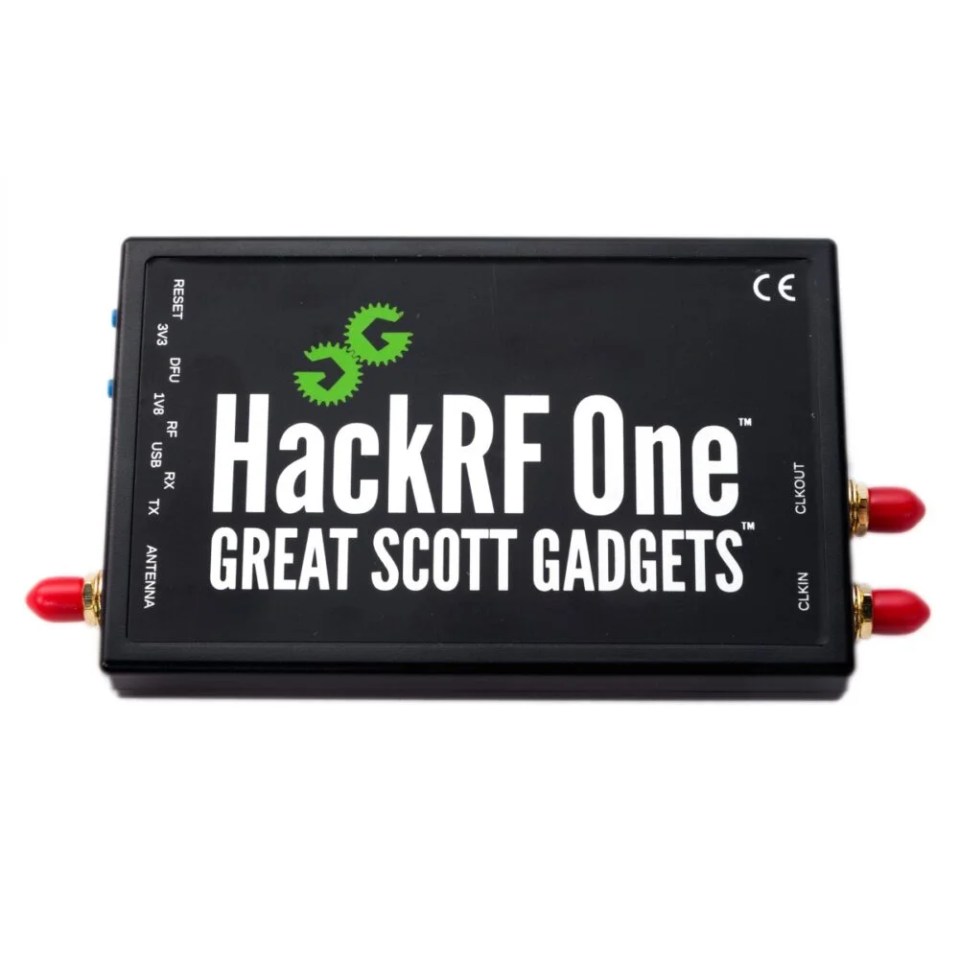
The HackRF One from Great Scott Gadgets is the go-to wideband SDR, and this Nooelec bundle adds the ANT500 telescopic antenna, four SMA adapters and a USB cable. It covers 1 MHz to 6 GHz, so it can receive ESP32 Wi-Fi, BLE, Zigbee and LoRa signals, and its up to 20 MSPS sample rate shows about 20 MHz of spectrum at once, enough to see a whole Wi-Fi channel. Unlike RTL-SDR dongles it can also transmit (half-duplex), which is useful for testing your ESP32 receiver code with replayed or generated signals. It is fully open source and supported by GNU Radio, SDR++ and many other tools.
✅ Pros: Covers every ESP32 radio band; wide 20 MHz view; can transmit; open source.
❌ Cons: 8-bit ADC is noisier than premium SDRs; transmitting needs care and the right license.
🎯 Verdict: The best wideband SDR for seeing and testing every ESP32 radio, from LoRa to Wi-Fi.
🧲 BEST SDR BUNDLE WITH ANTENNAS · ⭐ 4.4/56. Nooelec NESDR SMArt v5 Bundle
100 kHz to 1.75 GHz · up to 3.2 MHz bandwidth · 0.5 PPM TCXO · aluminum case · magnetic base and 3 antennas
Buy Here →
The Nooelec NESDR SMArt v5 Bundle is a well built RTL-SDR in a brushed aluminum case with a 0.5 PPM TCXO, covering 100 kHz to 1.75 GHz. The bundle version includes a magnetic antenna base with 2 m of RG58 cable and three antennas, including a telescopic whip and a 433 MHz antenna, so you can start decoding 433 MHz sensors, remotes and LoRa traffic out of the box. It is a strong alternative to the RTL-SDR Blog V4 if you prefer Nooelec’s antenna set, and it is one of the most reviewed SDRs on Amazon.
✅ Pros: Solid metal case; stable TCXO; antennas and magnetic base included; very popular.
❌ Cons: No 2.4 GHz coverage; receive only; slightly less HF capable than the V4.
🎯 Verdict: The best ready-to-go SDR bundle for 433 MHz and LoRa experiments.
💵 BEST CHEAP SUB-GHZ SPECTRUM ANALYZER · ⭐ 4.3/57. tinySA Basic (AURSINC)
100 kHz to 350 MHz low input · 240 to 960 MHz high input · 2.8 in touchscreen · signal generator · USB-C
Buy Here →
The original tinySA is a smaller, cheaper sibling of the Ultra. It has a 2.8 inch touchscreen and two inputs: 100 kHz to 350 MHz and 240 to 960 MHz, which together cover 433, 868 and 915 MHz LoRa and most sub-GHz ISM gear. It also works as a basic signal generator, and the kit includes RF cables, SMA adapters, a telescopic antenna and a USB-C cable. It cannot see 2.4 GHz, but for checking that a LoRa module is on frequency, spotting harmonics or hunting noise from a buck converter in the sub-GHz range, it is a lot of instrument for very little money.
✅ Pros: Very affordable; standalone; two inputs cover all sub-GHz ISM bands.
❌ Cons: No 2.4 GHz; small screen and smaller battery than the Ultra.
🎯 Verdict: The cheapest standalone spectrum analyzer worth buying for LoRa projects.
🏢 BEST BENCH SPECTRUM ANALYZER · ⭐ 4.6/58. Siglent SSA3032X Plus
9 kHz to 3.2 GHz · 10.1 in multi-touch display · tracking generator and preamp standard · LAN, USB, SCPI
Buy Here →
When you outgrow handhelds, the Siglent SSA3032X Plus is a proper bench spectrum analyzer that covers 9 kHz to 3.2 GHz, so the full 2.4 GHz Wi-Fi and BLE band is in range with real resolution bandwidth control (1 Hz to 1 MHz). This listing includes the tracking generator (100 kHz to 3.2 GHz) and the preamplifier as standard, which lets it sweep filters and antennas like a scalar network analyzer. A big 10.1 inch multi-touch screen, LAN web control and SCPI remote commands make it a great fit for pre-compliance EMI checks on an ESP32 product before sending it to a test lab.
✅ Pros: Real bench performance; covers 2.4 GHz; tracking generator included; LAN and SCPI control.
❌ Cons: Large and mains powered; a big step up in cost; no 5 GHz coverage.
🎯 Verdict: The best choice for serious ESP32 product work and EMI pre-compliance.
➕ Also Worth Considering
🔩 BEST 3 GHZ VNA WITH N-TYPE PORTS · ⭐ 4.3/5
9. Seesii NanoVNA SAA-2N V2.2
The NanoVNA SAA-2N V2.2 sits between the NanoVNA-H4 and the LiteVNA 64. It measures from 50 kHz to 3 GHz, enough for 2.4 GHz Wi-Fi and BLE antennas, on a 4 inch touchscreen, and uses rugged N-type connectors instead of small SMA jacks. The kit includes an N-type calibration set, N to N and N to SMA cables, a test board kit and a carry case. It is a good pick if you mostly measure larger outdoor antennas, though you will need adapters for typical ESP32 U.FL or SMA antennas.
Buy Here →🧪 Which Tool for Which ESP32 Job?
| ESP32 Task | Best Pick |
|---|
| Find a crowded Wi-Fi channel or noisy power supply near 2.4 GHz | tinySA Ultra+ ZS406 |
| Confirm a LoRa or Meshtastic node transmits on the right frequency | RTL-SDR Blog V4 or tinySA Basic |
| Tune a 2.4 GHz or 5 GHz external antenna for an ESP32 board | LiteVNA 64 |
| Check whether a 868/915 MHz LoRa antenna is tuned for your region | Seesii NanoVNA-H4 |
| Receive, record and replay Wi-Fi, BLE or Zigbee signals | Nooelec HackRF One Bundle |
| Decode 433 MHz weather sensors and remotes before writing ESP32 code | Nooelec NESDR SMArt v5 Bundle |
| EMI pre-compliance on an ESP32 product before a test lab | Siglent SSA3032X Plus |
| Measure large outdoor antennas with rugged connectors | Seesii NanoVNA SAA-2N V2.2 |
🛒 Which One Should You Buy?
🏆
One RF tool for everything
The tinySA Ultra+ ZS406.
📻
Cheapest way into SDR and LoRa
The RTL-SDR Blog V4 kit.
📡
Tuning Wi-Fi and BLE antennas
The LiteVNA 64.
🎯
Tuning LoRa antennas on a budget
The Seesii NanoVNA-H4.
🛰️
Receive and transmit across 6 GHz
The Nooelec HackRF One Bundle.
🏢
Product development and EMI checks
The Siglent SSA3032X Plus.
❓ Frequently Asked Questions
Can an RTL-SDR see ESP32 Wi-Fi or Bluetooth?
No. Standard RTL-SDR dongles such as the RTL-SDR Blog V4 and Nooelec NESDR SMArt top out around 1.75 GHz, while ESP32 Wi-Fi and BLE use 2.4 to 2.5 GHz. They are excellent for LoRa, 433 MHz and 868/915 MHz work. To see 2.4 GHz you need a tool like the tinySA Ultra, HackRF One or a bench analyzer that reaches at least 2.5 GHz.
Do I need a spectrum analyzer or a VNA?
A spectrum analyzer or SDR shows signals that are already in the air, so use it to find interference, check transmit frequency and compare signal strength. A VNA sends its own test signal into an antenna or filter and measures what comes back, so use it to tune antennas and check SWR. Many makers start with a tinySA and add a NanoVNA once they start swapping antennas.
Why is my ESP32 LoRa range so poor?
The most common causes are an antenna tuned for the wrong region (for example a 433 MHz antenna on a 915 MHz radio), a loose U.FL connector, or noise from nearby switching regulators and displays. A NanoVNA shows whether the antenna is resonant on your band, and a tinySA or SDR shows whether the transmitter is on frequency and how noisy the band is.
Is it legal to transmit with a HackRF or the tinySA signal generator?
Receiving is generally fine, but transmitting is regulated. Keep power very low, use a dummy load or cable connection for bench tests, and only transmit on frequencies and power levels allowed in your country or covered by an amateur radio license. Never jam or interfere with other users, including Wi-Fi and Bluetooth networks you do not own.
Can these tools help with FCC or CE testing for an ESP32 product?
They help with pre-compliance, not certification. A bench analyzer such as the Siglent SSA3032X Plus with near-field probes lets you find and fix noisy traces, clocks and power supplies before you pay for lab time. Using a pre-certified ESP32 module also helps, but the final product still needs testing at an accredited lab.
🏁 Final Verdict: Best RF Test Tools for ESP32
The right tool for the radio problem you need to solve:
🥇 Best Overall: tinySA Ultra+ ZS406 (AURSINC)
Buy Here →📻 Best Budget SDR for LoRa and Sub-GHz: RTL-SDR Blog V4 with Dipole Antenna Kit
Buy Here →📡 Best VNA for 2.4 GHz Antennas: LiteVNA 64
Buy Here →🎯 Best Value VNA for LoRa Antennas: Seesii NanoVNA-H4
Buy Here →🛰️ Best Wideband Transmit and Receive SDR: Nooelec HackRF One Bundle
Buy Here →🧲 Best SDR Bundle with Antennas: Nooelec NESDR SMArt v5 Bundle
Buy Here →💵 Best Cheap Sub-GHz Spectrum Analyzer: tinySA Basic (AURSINC)
Buy Here →🏢 Best Bench Spectrum Analyzer: Siglent SSA3032X Plus
Buy Here →🔩 Best 3 GHz VNA with N-Type Ports: Seesii NanoVNA SAA-2N V2.2
Buy Here →For most ESP32 makers, the tinySA Ultra+ ZS406 is the RF tool to buy first: it fits in a pocket, runs on battery and actually reaches the 2.4 GHz band where ESP32 Wi-Fi and Bluetooth live. Add the RTL-SDR Blog V4 for cheap LoRa and sub-GHz decoding, a NanoVNA-H4 or LiteVNA 64 once you start tuning antennas, and step up to the HackRF One or Siglent SSA3032X Plus for wideband or product-level work. Round out your bench with our oscilloscopes for beginners guide, the function and signal generators roundup and our logic analyzers guide, and pick a radio to test with in our ESP32 LoRa boards for Meshtastic comparison.
💬 What RF problem are you chasing on your ESP32 project: weak Wi-Fi, short LoRa range or a noisy power supply? Tell us in the comments below, and we’ll help you pick the right tool.
All Amazon links above use our affiliate tag (esp32tutorials-20). Purchasing through them supports esp32tutorials.com at no extra cost to you. Prices and availability change frequently, so always confirm the current price on Amazon before buying.
We are a team of experienced Embedded Software Developers with skills in developing Embedded Linux, RTOS, and IoT products from scratch to deployment with a demonstrated history of working in the embedded software industry. Contact us for your projects: admin@esp32tutorials.com